
Sizing Residential Energy Storage for Backup Power During Grid Outages
Start With the Loads That Must Stay On
Residential Energy Storage for Backup Power should be sized from the loads that must remain available during an outage, not from the largest battery capacity that fits the budget. For businesses that own, manage, develop, or finance residential properties, this distinction affects both system cost and the credibility of the resilience promise made to occupants.
A battery that can keep lights, refrigeration, communications, selected outlets, and essential pumps running for an extended outage may be highly effective. That same battery may be inadequate if the expectation is to operate central air conditioning, electric resistance heating, electric water heating, laundry equipment, cooking appliances, and electric vehicle charging as though the grid were still present.
The first decision is therefore operational: define what “backup” means for the property. Is the system intended to preserve basic habitability, protect a home office, maintain a critical medical load, support a rental property between utility restoration events, or provide near-normal operation for a high-value residence? Each objective produces a different load profile and a different sizing outcome.
For most projects, separating loads into three groups prevents overbuilding the battery:
- Critical continuous loads: refrigeration, internet equipment, security systems, lighting, sump pumps, medical equipment, and selected electronics.
- Intermittent but important loads: well pumps, garage doors, microwave ovens, kitchen circuits, some HVAC equipment, and small workshop tools.
- High-demand discretionary loads: electric resistance heating, large air-conditioning systems, clothes dryers, electric ranges, water heaters, hot tubs, and EV chargers.
A practical backup plan normally gives the first group priority, evaluates the second group carefully, and either excludes or actively manages the third. This does not reduce the value of storage. It makes the system more likely to perform as expected when an outage actually occurs.
Battery Capacity Answers “How Long”; Inverter Power Answers “What Can Run”
Battery capacity and output power are often discussed together, but they solve different problems. Capacity, usually expressed in kilowatt-hours (kWh), determines how much energy is available over time. Inverter power, expressed in kilowatts (kW), determines how much equipment can operate at one time. A backup system can have enough stored energy for a long outage while still failing to start a pump, compressor, or HVAC motor if its inverter cannot supply the necessary peak power.
Decision-makers should ask for both a load-duration calculation and a power-demand calculation. The duration calculation estimates daily energy use for the circuits selected for backup. The power calculation reviews simultaneous operation, starting surges, and the limits of the inverter and backup panel.
Consider a simple case. A home may use modest energy over a day for refrigeration, lights, internet, and electronics. But a well pump or air-conditioning compressor can create a brief high-power event. If the system is sized only from daily energy consumption, it may look sufficient on paper while producing nuisance shutdowns or requiring strict load shedding during use.
Motor loads deserve special attention. Pumps, compressors, fans, and some power tools can draw a higher current when starting than when running. Equipment condition, motor type, control method, and electrical configuration all affect that demand. A nameplate running wattage is useful, but it should not be treated as the whole design basis. The system provider should confirm whether the inverter can support the relevant starting load and whether soft-start equipment, staged control, or a different backup strategy is needed.
For properties with electrically driven water systems, basement drainage, or conditioned storage areas, this review can be more important than adding a small amount of extra battery capacity. A battery cannot compensate for an inverter that is unable to support the required momentary load.
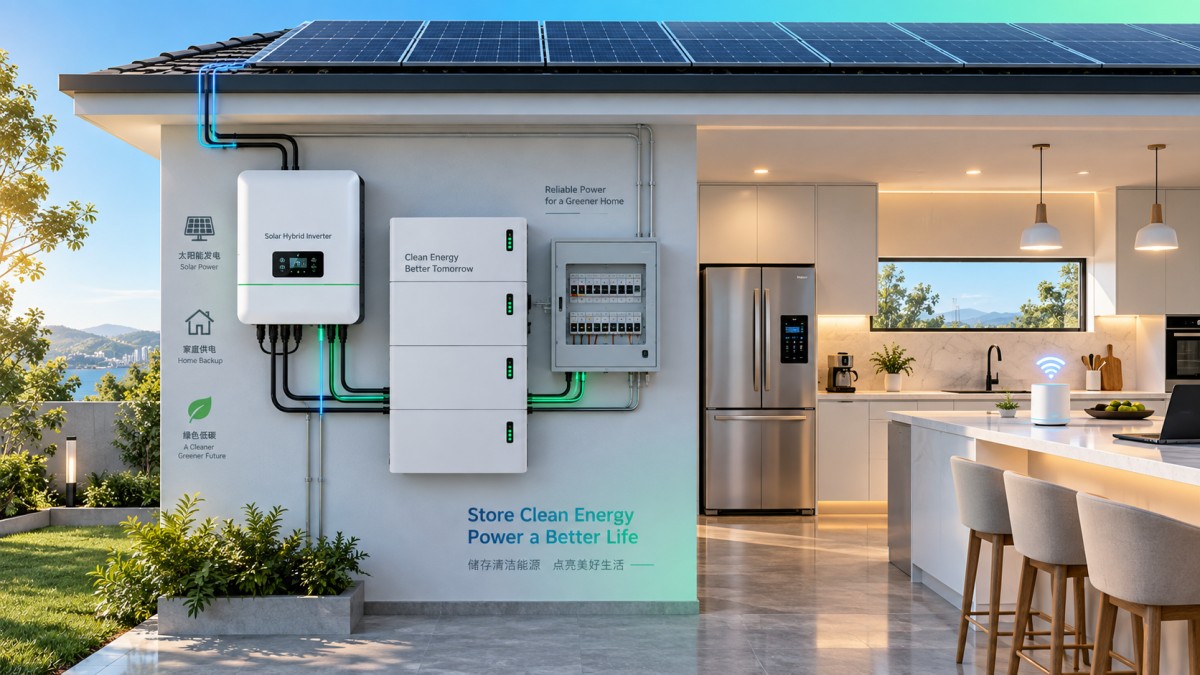
Estimate Outage Duration Before Choosing a kWh Target
The next question is how long the system must operate without the grid. There is no universal answer because outage exposure varies by location, utility network, weather risk, building use, and the availability of alternative power sources. A one-evening backup objective should be designed differently from a plan intended to maintain essential loads through a multi-day disruption.
Rather than selecting a battery based on a broad claim such as “whole-home backup,” define an outage window and calculate the energy needed within that window. For each critical load, estimate:
- Its power draw while operating.
- How many hours per day it is likely to run during an outage.
- Whether it runs continuously, intermittently, or only on demand.
- Whether occupants can reduce or defer its use.
- Whether its consumption changes materially with outdoor temperature.
The sum of these loads provides a useful starting point, but it should not be treated as the final battery capacity. Storage systems have usable-capacity limits, conversion losses, reserve settings, and operating conditions that affect delivered energy. The nameplate capacity of a battery is not always identical to the energy available to critical loads during an outage.
A sensible design discussion should therefore distinguish between nominal battery capacity and usable backup energy. It should also clarify whether the system preserves a reserve for outage protection during normal grid-connected operation. A homeowner who uses stored energy each evening to reduce utility purchases may have less battery energy remaining when an unexpected outage begins unless the controls maintain a defined reserve.
For property portfolios, the required outage duration may differ by home type. A small urban residence with gas cooking and limited heating demand may be suited to a compact essential-loads system. A rural home with a well pump, electric appliances, and limited access during a storm may justify a larger battery, a solar-supported design, or a battery-generator combination. Applying one storage size across both cases can create inconsistent outcomes and unnecessary capital spend.
Whole-Home Backup Requires Load Management, Not Just a Larger Battery
Whole-home backup is often understood as every circuit being available at all times. In practice, the more reliable interpretation is that the system can support the home as a whole within defined operating rules. Those rules may include automatic load shedding, thermostat limits, staged appliance operation, or restrictions on charging and heating during an outage.
Without load management, a residence with several major electric loads can exceed inverter capacity quickly. A heat pump, induction cooktop, dryer, water heater, and EV charger do not need to run for very long to create a power demand far above what a typical backup configuration is designed to supply. Increasing battery capacity alone does not solve that problem because the constraint may be instantaneous output power rather than stored energy.
Load management can take several forms. Some projects use a dedicated critical-loads panel that physically separates backed-up circuits from nonessential circuits. Others retain broader circuit coverage but rely on smart controls to disconnect selected loads when battery state of charge falls or power demand rises. The right approach depends on the building electrical layout, user expectations, local installation requirements, and the consequences of interrupting particular equipment.
For decision-makers, the important procurement question is not simply whether load management is offered. It is whether the control logic has been defined for the property. Which circuits are always available? Which loads are shed first? Can occupants override the settings? What happens when several motor loads start close together? Are the controls understandable enough that occupants will use the system correctly under outage conditions?
A backup design is only as credible as its operating rules. If a system requires occupants to remember not to use certain appliances, those limitations should be explicit before installation. Automated controls are often more dependable than behavioral assumptions, particularly in rental housing, second homes, or properties with changing occupants.
Solar Can Extend Backup, but It Does Not Eliminate Sizing Discipline
Solar generation can materially improve outage endurance when the system can operate in islanded mode and recharge the battery while disconnected from the grid. It is particularly valuable for recurring daytime loads and for outages that last beyond the battery-only window. However, solar output is variable, seasonal, and dependent on weather, shading, roof orientation, and the time of year. It should be modeled as a source of replenishment, not assumed to be a guaranteed replacement for grid supply.
A battery paired with solar may perform very differently across seasons. Cooling loads may rise during sunny periods when solar production is useful, but severe weather can reduce output precisely when outage risk is elevated. Winter conditions can combine shorter solar production windows with higher heating demand. These patterns do not make solar unsuitable for backup; they make conservative load prioritization more important.
System architecture also matters. Not every grid-connected solar installation automatically provides power during an outage. The battery, inverter, transfer equipment, protections, and controls must be designed for backup operation. Decision-makers should confirm the intended islanding behavior and understand which solar circuits, if any, remain available during an outage.
For properties where electrical demand is dominated by high-power heating or cooling, solar and storage may still need support from a generator or from non-electric alternatives. This is a planning choice rather than a failure of the battery system. Storage is most effective when its role is matched to the load it is expected to carry.
Design for the Electrical System, Not Only for the Battery
Residential storage projects can become constrained by the existing electrical infrastructure before battery capacity becomes the main issue. Main service rating, panel space, breaker configuration, meter arrangements, grounding, service upgrades, and the location of backup equipment all influence feasibility and cost. A technically attractive battery package may require substantial electrical work if the home was not designed with backup integration in mind.
Early site assessment should review the single-line electrical arrangement and identify whether the project will use a critical-loads panel, a whole-home backup gateway, or another transfer configuration. It should also address the physical environment: indoor or outdoor placement, temperature exposure, ventilation requirements, access for installation and service, and flood or impact risk.
This matters for enterprise buyers because a portfolio rollout can appear standardized at the product level while becoming highly variable at the site level. Homes built in different years, with different service equipment and appliance mixes, may require different installation scopes. A structured prequalification process helps distinguish straightforward sites from those needing an electrical upgrade, load reduction, or alternative resilience strategy.
Where backup power supports equipment connected to specialized vehicles or property operations, the electrical boundary should be kept clear. A residence may need emergency power for a garage circuit or utility equipment, but high-demand mobile or auxiliary loads should not be added casually to the home backup plan. For example, equipment associated with a Water sprinkler deployment may be better evaluated as a separate operational load unless its duty cycle and power requirements have been explicitly included in the resilience design.
Use a Scenario-Based Specification for Procurement
Procurement documents often ask for a battery size and inverter rating before the operating scenario has been fully defined. That sequence encourages suppliers to price against incomplete assumptions. A stronger specification starts with the desired outage behavior and asks suppliers to show how their proposed configuration meets it.
Useful scenarios include a short evening outage, an overnight outage with refrigeration and communications, a multi-day outage with solar recharge, and a high-demand event in which a pump or HVAC load starts while other critical circuits are active. The goal is not to simulate every possible event. It is to expose the assumptions that determine whether the proposed system will deliver the stated level of backup.
The specification should require clarity on usable energy, continuous and surge output, outage transfer behavior, backed-up circuits, control priorities, solar operation during islanding, expansion capability, monitoring access, warranty conditions, and maintenance responsibilities. It should also distinguish installed equipment capacity from guaranteed operating behavior under the agreed load assumptions.
Modularity is valuable when future demand is uncertain, but expansion claims should be reviewed closely. Additional batteries may increase runtime without increasing inverter output. Adding more inverter capacity may involve changes to the backup gateway, electrical panel, controls, or utility interconnection. A scalable system is most useful when the path to expansion has been considered during the initial electrical design.
Right-Sizing Is an Operational Decision
The best Residential Energy Storage for Backup Power design is rarely the largest system available. It is the one that supports a clearly defined set of loads for a realistic outage duration, manages peak demand without unexpected shutdowns, and fits the property’s electrical infrastructure.
For enterprise decision-makers, the strongest starting point is a load-priority worksheet and a set of outage scenarios. Once those are established, battery capacity, inverter power, solar integration, controls, and installation scope become decisions that can be evaluated on their actual contribution to resilience. That approach produces a backup strategy occupants can understand, installers can deliver, and asset owners can defend over the life of the system.