Smart Grid Solutions for Managing Peak Demand and Distributed Energy Assets
Smart Grid Solutions for Managing Peak Demand and Distributed Energy Assets
Energy management has become a board-level operating issue rather than a facilities concern. Electricity prices may vary sharply by time of use, network constraints can limit expansion plans, and on-site solar, batteries, electric fleets, and flexible loads create more choices—but also more complexity. The central question is no longer whether an enterprise should use distributed energy resources. It is whether those resources can be coordinated well enough to protect operations and improve energy economics.
A Smart Grid Solution brings distributed generation, energy storage, controllable loads, metering, and digital controls into a single operating framework. Instead of treating each asset as an isolated project, the system monitors conditions in real time and applies agreed rules: reduce grid imports during a demand peak, store excess photovoltaic output, preserve battery capacity for backup, or shift non-critical consumption to a lower-cost period. The technology itself matters, but the operating logic matters just as much.
For decision-makers, the value lies in making energy behavior visible and controllable. A battery without an integrated control strategy can simply become an expensive asset with irregular use. Solar generation without load coordination may export power at a lower value while the facility later buys electricity during its most expensive hours. The practical task is to match each distributed asset to the site’s load profile, tariff structure, resilience requirements, and growth plan.
Why Peak Demand Is Often the First Problem to Solve
Peak demand is not always obvious from a monthly utility bill. A site may consume a reasonable amount of energy overall while still creating brief, costly demand spikes when large motors start, charging equipment operates simultaneously, refrigeration cycles overlap, or production ramps up after a pause. In many commercial and industrial settings, these short intervals influence grid charges, capacity requirements, or contractual exposure. The relevant detail is therefore not just total kilowatt-hours, but the shape of demand over time.
A well-designed control platform does not merely discharge a battery whenever electricity is expensive. It needs to forecast or detect approaching peaks, understand which loads can be adjusted, account for battery state of charge, and leave sufficient reserve for critical operations. That requires a hierarchy of priorities. For example, safety systems, essential production lines, or temperature-sensitive processes may have to remain untouched, while selected charging loads or auxiliary equipment can respond to a peak-control signal.
This is where many early projects lose value. They are sized around a headline battery capacity but do not adequately examine the site’s interval data, transformer loading, power quality, operating schedules, or future electrification plans. A storage system designed only for today’s average load may be poorly suited to tomorrow’s expanded production schedule or vehicle charging demand. Peak shaving is a control problem and a planning problem at the same time.
The questions that should be answered before sizing equipment
- When do the highest demand intervals occur, and how long do they typically last?
- Are peaks driven by predictable schedules, weather-sensitive loads, or irregular operating events?
- Which loads are technically flexible, and who has authority to change their operating schedule?
- What minimum backup reserve must remain available during normal grid-connected operation?
- Will solar additions, electrified equipment, or facility expansion materially change the load profile?
- Which local interconnection, fire safety, grid-code, and permitting requirements apply to the proposed architecture?
These questions may appear basic, but they prevent a common mistake: selecting hardware first and discovering operational constraints later. A credible solution provider should be prepared to discuss data quality, operating assumptions, integration boundaries, and what the system will deliberately not control.
Coordinating Distributed Energy Assets Instead of Adding More Silos
Distributed energy assets can improve site economics, but they introduce competing priorities. Solar generation may be strongest when facility demand is low. Battery capacity may be needed for both tariff management and backup. Electric vehicle charging may be convenient at the same time that the facility approaches its contracted demand limit. A generator may provide resilience but should not be started unnecessarily. Without coordination, each asset follows its own local logic, and the site loses the benefit of the whole portfolio.
The operating layer of a Smart Grid Solution is often described as an energy management system, or EMS. Its role is to collect signals from meters, inverters, battery management systems, generation equipment, and selected loads; apply configured strategies; and send commands within approved limits. The EMS should also preserve a clear audit trail. Operations teams need to know why a battery discharged, why charging was delayed, or why a load-control event was triggered. Black-box automation is difficult to trust when uptime is at stake.
A practical architecture usually separates fast local protection from higher-level optimization. Protection functions must respond safely even if communications are interrupted. Site-level controls then optimize energy flows according to tariffs, schedules, and operating priorities. If a cloud connection is used for monitoring or analytics, the site should still have clearly defined local behavior during a communications outage. Cybersecurity, user permissions, remote access procedures, and update management belong in the technical review, not as an afterthought.
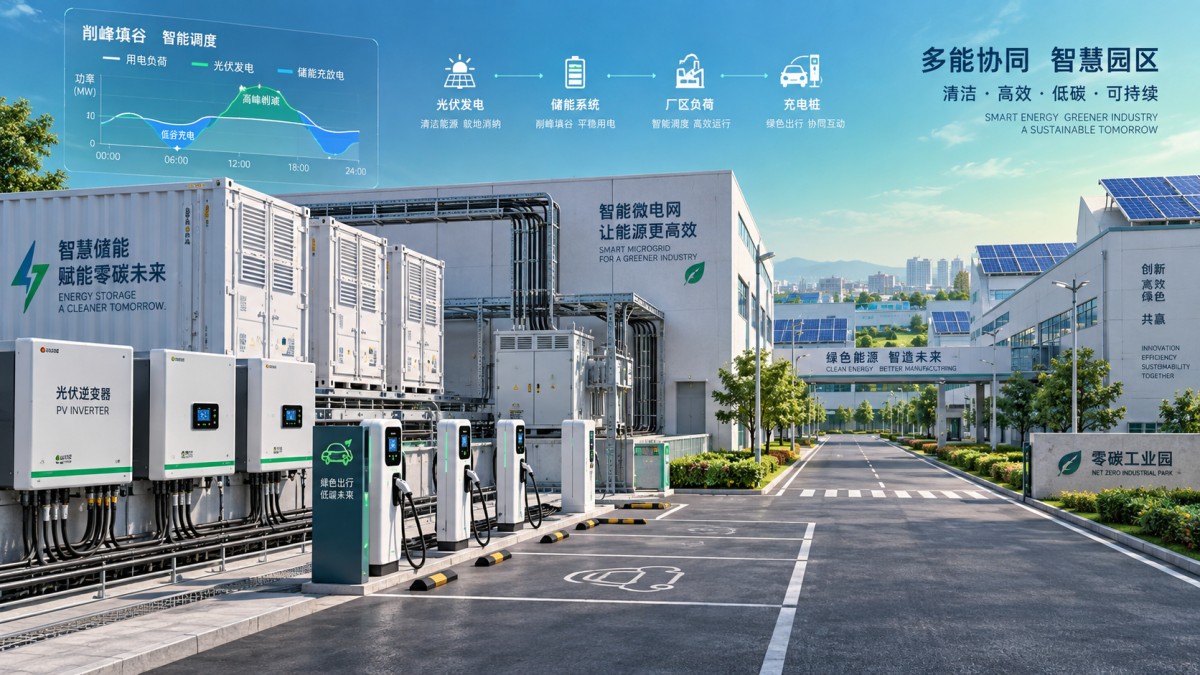
The same discipline applies to mobile and off-road electrification. Special vehicles may operate at depots, mines, ports, construction locations, or municipal service sites where grid capacity is limited and working patterns are uneven. Equipment such as a Water sprinkler used in special-vehicle applications can be part of a broader electrified operating environment. Its charging schedule, duty cycle, depot connection, and backup requirement should be considered alongside stationary storage and local renewable generation rather than treated as separate energy decisions.
Choosing the Right Control Strategy for the Site
There is no universal dispatch strategy. A facility with volatile demand and high peak-related charges may prioritize demand limiting. A site with substantial solar production may emphasize self-consumption and controlled battery charging. Remote or continuity-sensitive locations may value islanding capability and reserve management above tariff optimization. Some projects need all of these functions, but they should not be assumed to carry equal weight.
The table is not a substitute for engineering review, but it illustrates why storage power rating, usable energy, response time, and control integration must be assessed together. A project may have enough stored energy in theory while lacking sufficient power to contain a rapid demand spike. Conversely, a high-power system with limited duration may be ineffective when the facility’s peak period lasts longer than expected. The site’s interval data provides the starting point for this judgment.
Integration Risk Is Usually More Important Than the Dashboard
Dashboards can make a smart energy project look finished before it is operationally ready. The difficult work often sits behind the interface: compatibility between equipment protocols, meter placement, transformer and switchgear constraints, protection coordination, communications reliability, commissioning sequences, and the handover of responsibility between electrical contractors, equipment vendors, and site operators.
Interoperability should be tested against the actual scope. If the system is expected to receive data from third-party photovoltaic inverters, chargers, generators, or building controls, the project team should establish which data points are available, who owns access rights, how commands are limited, and what happens when one device is unavailable. “Compatible” can mean anything from read-only monitoring to full control. The distinction has commercial and operational consequences.
Battery safety and lifecycle management also deserve direct attention. Buyers should clarify the thermal management approach, alarms, emergency shutdown concept, maintenance access, warranty boundaries, replacement assumptions, and responsibilities for periodic inspection. Applicable codes and approval pathways vary by jurisdiction and installation type, so final design decisions should be reviewed against local requirements rather than copied from another project.
From Energy Hardware to an Operable System
EN New Power Technology (Shandong) Co., Ltd., established in 2020 as a wholly-owned subsidiary of a listed company, works across new energy power systems for off-road machinery and smart grid energy storage solutions. Its R&D, manufacturing, and sales operations are integrated across the value chain. For project owners, this type of capability can be useful when stationary storage, intelligent controls, and electrified equipment need to function as one operating system rather than as separate procurement packages.
Still, integration capability should be tested in project-specific terms. The useful discussion is not simply whether a supplier offers storage and controls, but whether it can define system boundaries, support technical interfaces, document commissioning responsibilities, and maintain clarity after handover. A resilient solution depends on practical serviceability as much as on architecture: who responds to faults, how replacement parts are managed, what remote diagnostics can see, and what on-site teams can safely do themselves.
Procurement teams often benefit from asking suppliers to distinguish committed functionality from future optionality. A platform may be capable of advanced forecasting, market participation, generator coordination, or fleet scheduling, but not every function belongs in the first deployment. Starting with a focused operating objective—such as a defined import limit or a solar self-consumption target—can make commissioning more reliable. Additional strategies can be introduced once the operating data confirms that the foundational controls are stable.
A Sensible Path to Deployment
The most dependable projects begin with a site energy baseline. Gather interval meter data where available, map major loads and generation assets, identify operational constraints, and review the tariff and connection agreement. Then define a small number of measurable operating rules. Examples may include limiting grid import below an agreed threshold when feasible, retaining a stated reserve for essential loads, or prioritizing on-site solar for defined consumption periods. The rules should be understandable to both finance and operations teams.
Before full commissioning, test the exceptions: a communications failure, unexpected solar reduction, a battery alarm, simultaneous charging demand, or a grid disturbance. These events reveal whether the system behaves in a safe and predictable way. They also clarify where manual intervention is needed. A Smart Grid Solution earns confidence not when every screen is green, but when the site team understands the fallback behavior under imperfect conditions.
The next step is to turn energy ambition into a disciplined technical brief: load data, planned distributed assets, critical-load priorities, grid constraints, site layout, desired operating modes, and local compliance requirements. With those inputs, an enterprise can evaluate storage sizing, control logic, integration scope, and lifecycle support on practical grounds—before committing to equipment that may not fit the way the site actually operates.