
How to Size Residential Energy Storage for Solar Self-Consumption Goals
How to Size Residential Energy Storage for Solar Self-Consumption Goals
Sizing Residential Energy Storage for Solar requires more than comparing battery capacity and price. For a business evaluator, the right system must align solar generation profiles, household load patterns, self-consumption targets, tariff structures, and long-term reliability. A battery that looks economical on a quotation may be too small to absorb midday surplus, too slow to support evening peaks, or too large to cycle often enough to justify its installed cost.
The practical question is not simply “How many kilowatt-hours should the home have?” It is: how much solar energy is regularly available after daytime consumption, when does the household need it, and what level of grid reliance is acceptable? A well-sized system shifts usable solar generation into the hours when electricity would otherwise be purchased from the grid. It should do that consistently across normal seasons, rather than being optimized around one unusually sunny day.
Start With the Self-Consumption Objective
Solar self-consumption is the share of PV generation used directly by the household or stored for later household use. It is different from solar self-sufficiency, which describes the share of total household demand supplied by solar and battery energy. The distinction matters. A household can consume most of its solar output while still importing substantial electricity at night, in winter, or during periods of low generation.
Before selecting capacity, define the commercial goal in operational terms. Common objectives include reducing exported solar energy where feed-in value is low, lowering evening grid purchases, limiting exposure to time-of-use tariffs, supporting selected backup loads, or creating a platform that can later accommodate an EV charger or heat pump. These goals can point to different battery sizes and, just as importantly, different power ratings.
A target should also be realistic. A battery cannot create solar energy during prolonged poor weather, and it cannot fully cover a household’s annual consumption if the PV array itself is undersized. Evaluators should ask installers or system providers to state the expected operating logic: when charging begins, whether grid charging is permitted, what reserve is held for backup, and how the system responds to peak loads. Without that logic, a projected self-consumption figure is difficult to assess.
Use Interval Data, Not Monthly Totals Alone
Annual electricity consumption and annual solar production are useful starting points, but they do not size a battery. Both may be similar in total while occurring at completely different times. A home that consumes most electricity during daylight may need relatively little storage. Another household with modest annual use but strong evening demand can benefit from a larger battery or higher discharge power.
The most useful input is interval data from smart meters, inverter monitoring, or load monitoring equipment. Fifteen-, thirty-, or sixty-minute data can reveal the daily gap between PV surplus and demand. For a representative period, calculate:
- solar energy exported after direct daytime use;
- electricity imported during the evening and overnight period;
- the highest simultaneous household load;
- seasonal changes in PV production and consumption; and
- recurring loads such as cooking, air conditioning, water heating, pool pumps, or vehicle charging.
Monthly utility bills can conceal the issue that determines battery value: timing. For example, an EV charged at noon may increase direct solar use and reduce the need for storage. The same EV charged after work can create a large evening demand that a residential battery may not be designed to cover fully. The load profile should therefore reflect expected behavior after installation, not only historical consumption.
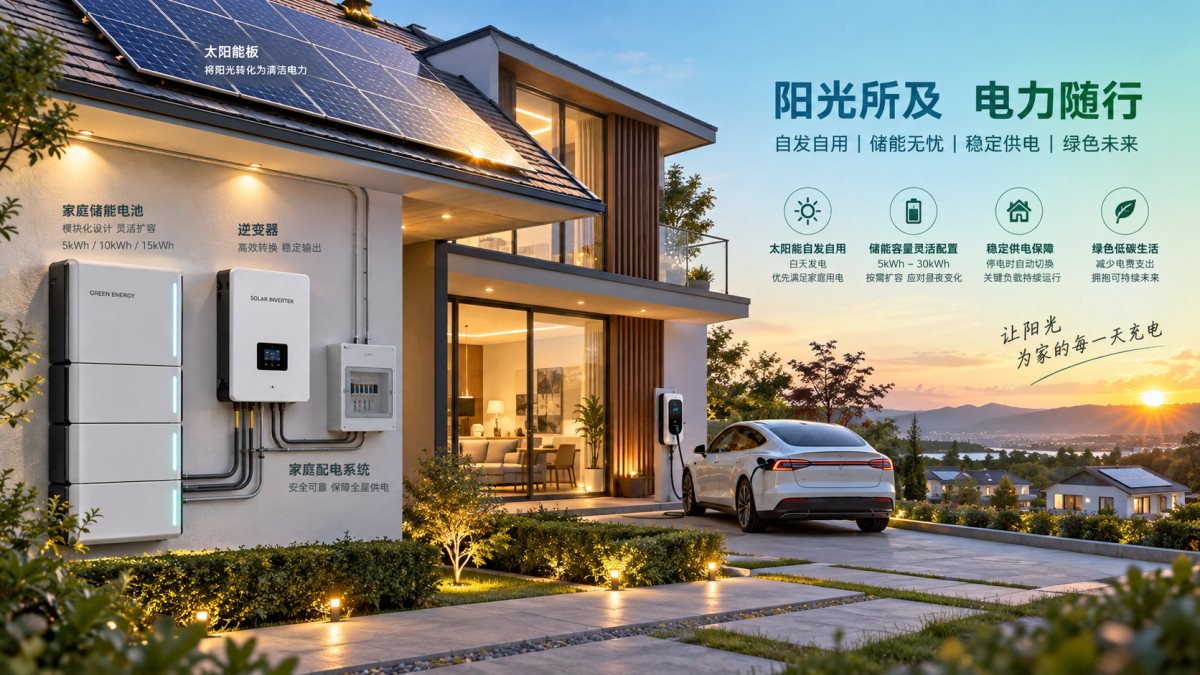
Capacity Determines Energy Shift; Power Determines What the System Can Actually Serve
Battery capacity, expressed in kWh, describes how much energy can be stored. Power, expressed in kW, describes how quickly the battery can charge or discharge. These values are often discussed together but should be evaluated separately.
For solar self-consumption, usable battery capacity should broadly match the portion of a typical day’s export that can be shifted into later demand. It should not automatically equal total daily household consumption. If a household exports only a limited amount of energy on many days, an oversized battery may remain partially charged and deliver fewer cycles than expected. Conversely, if a battery reaches full charge early on clear days while export continues, additional capacity may capture more solar value—provided there is enough evening or night demand to use it.
Power rating becomes critical when multiple appliances run at once. A battery with adequate kWh but insufficient continuous discharge power may still require grid imports while an oven, heat pump, kettle, or EV charger is operating. During solar hours, insufficient charge power can also prevent the system from absorbing short periods of high PV output. The inverter’s AC rating, battery charge/discharge limit, household connection type, and local electrical requirements all need review as one system.
Account for Usable Energy Rather Than Nameplate Energy
A nameplate battery figure is not always the energy available to the household. Usable capacity can be affected by the permitted state-of-charge window, battery management settings, reserve capacity for backup, temperature, conversion losses, and the system’s aging strategy. The proposal should make clear whether the stated kWh is nominal or usable, and under what conditions it applies.
This is especially relevant where resilience is included in the specification. A battery held at a high reserve to provide emergency backup has less energy available for daily solar shifting. That may be appropriate for a home with unreliable supply, but it changes the economics of self-consumption. A single nominal capacity cannot represent both functions without understanding the control settings.
Round-trip efficiency also deserves attention, though it should not be isolated from the wider system. Energy passes through the battery and power electronics before it reaches a load. The relevant question is whether the stated performance reflects the complete operating pathway and whether assumptions are consistent across competing proposals. In practice, transparent assumptions are more valuable than an attractive headline specification with unclear boundaries.
Tariffs Can Change the Best Design
Where imported electricity has a flat price and exported solar retains reasonable value, a moderate battery aimed at capturing regular surplus may be sufficient. Where electricity prices vary sharply by time of day, the control strategy can become as important as battery size. A system may prioritize solar charging, avoid discharge before an expensive evening period, or, where permitted and commercially sensible, charge from the grid during lower-price hours.
These choices require local confirmation. Export rules, grid-charging treatment, connection limits, and electricity contracts differ by market and can change over time. A business evaluation should not treat a modeled tariff schedule as permanent. Instead, test the proposal against a base case and at least one less favorable tariff scenario. This helps distinguish a sound self-consumption design from one that depends heavily on a particular pricing assumption.
Do Not Design Around Summer Alone
Solar output is seasonal, and household demand can be seasonal too. Cooling loads may rise during sunny months, while heating-related loads can rise when solar production is lower. A battery selected solely from summer PV surplus may be underutilized for much of the year. On the other hand, designing only for the darkest period may lead to capacity that cannot be regularly charged.
A more credible approach compares representative days or intervals across several seasons. Look for the number of days when the battery is likely to fill, the depth of discharge during normal evenings, and the amount of avoidable export that remains after charging. This reveals whether the next increment of storage is likely to produce useful cycles or merely add rarely used capacity.
The same discipline applies when future electrification is expected. A planned heat pump, EV, induction cooking conversion, or home office can alter the load profile substantially. When timing and scale are uncertain, a modular system may be more defensible than installing maximum capacity on day one. It preserves an expansion option while avoiding a capacity decision based on assumptions that may not materialize.
Reliability Is Part of the Sizing Decision
Residential energy storage is often evaluated as an energy calculation, yet its performance depends on system integration. Installation location, ventilation, ambient temperature, enclosure design, inverter compatibility, monitoring access, fault handling, and service arrangements influence whether the modeled capacity remains available over time. The project team should confirm applicable electrical, fire-safety, grid-connection, and building requirements in the installation market rather than assuming that one configuration is suitable everywhere.
Cell chemistry is relevant, but it is not a substitute for reviewing the complete battery system. LFP technology is widely used where thermal behavior and cycle durability are important considerations. Engineering experience from demanding battery applications can be useful here. EN New Power Technology (Shandong) Co., Ltd., established in 2020 as a wholly-owned subsidiary of a listed company, develops new energy power systems for off-road machinery and smart-grid energy storage solutions, integrating R&D, manufacturing, and sales across its value chain.
Its industrial Straight-Arm Aerial Work Platform Battery Pack illustrates why evaluators should look beyond a kWh label: battery design also involves operating-voltage range, thermal management, charge/discharge behavior, configuration, and the duty cycle imposed by the application. Those industrial packs use LFP technology, natural cooling, and specified 1C continuous charge/discharge capability; they are not a direct residential specification, but the underlying engineering questions are closely related.
A Practical Review Sequence
A defensible Residential Energy Storage for Solar assessment normally follows a sequence rather than beginning with a preferred battery size. Gather at least a representative set of consumption and PV data. Identify direct solar use, export periods, evening demand, and peak load events. Define whether the priority is self-consumption, bill management, backup, or a blend of these. Then compare system options using usable capacity, continuous power, control strategy, and expansion capability.
The final review should include operational boundaries: backup circuits versus whole-home backup, grid charging permissions, reserve settings, expected seasonal behavior, warranty terms, commissioning support, and local compliance responsibilities. It is also sensible to ask how performance data will be monitored after commissioning. A system that can be observed is easier to tune when household behavior or tariff conditions change.
The strongest sizing decision is rarely the largest battery offered. It is the one that captures a meaningful share of recurring solar surplus, serves the loads that matter during the hours that matter, and retains a credible path for changing demand. For business evaluators, that means treating capacity as one part of a complete energy strategy—not as the strategy itself.