
How to Diagnose Forklift Battery Performance Loss in Multi-Shift Warehouses
In multi-shift warehouses, declining forklift battery performance can quickly increase operating costs, disrupt throughput, and complicate asset evaluations.
Identifying whether the cause is charging behavior, battery aging, temperature exposure, or workload imbalance helps decision-makers prioritize the right corrective action.
This guide outlines practical diagnostic indicators for evaluating battery health, reducing downtime, and supporting more reliable electrification investments.
Start with the Business Impact, Not the Battery Complaint
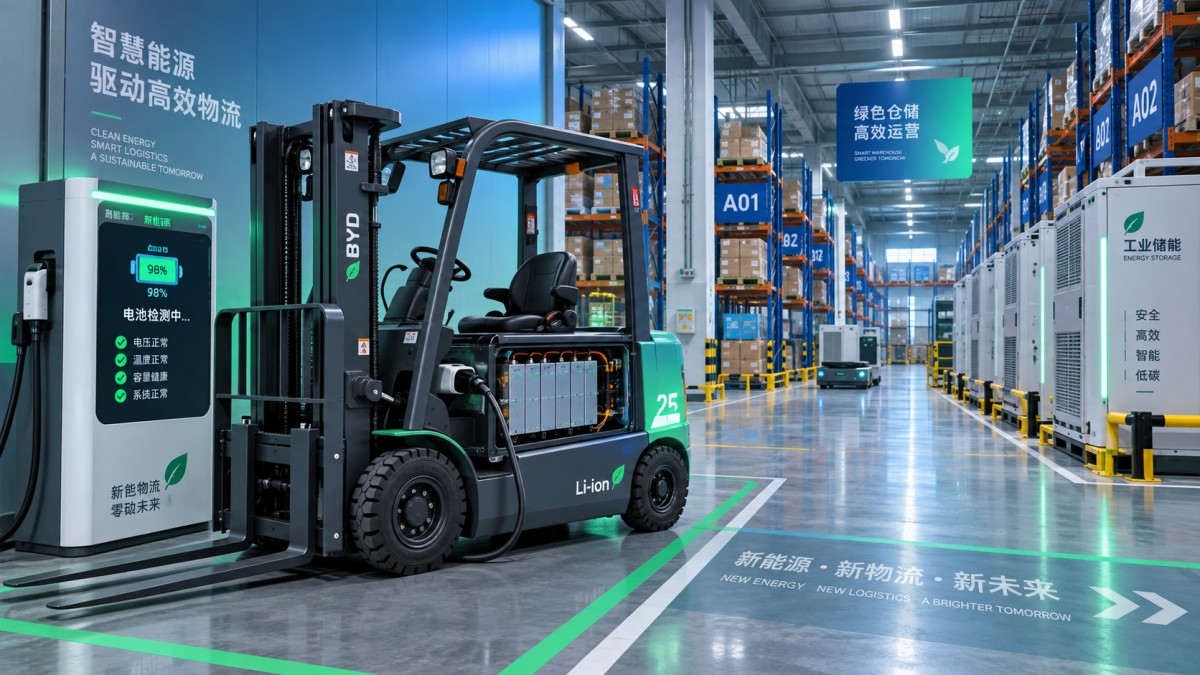
For business evaluators, forklift battery performance is not merely a maintenance issue. It directly affects labor utilization, order fulfillment capacity, fleet availability, and replacement capital planning.
A report that a forklift “does not last a full shift” should trigger a structured review. The same symptom can result from poor charging, battery degradation, excessive loads, or unsuitable operations.
The most useful diagnosis separates temporary operating problems from irreversible battery health loss. This distinction determines whether management should change procedures, repair equipment, or budget for replacement assets.
Begin by quantifying the operational consequence. Track missed trips, battery changes, charging delays, overtime hours, idle vehicles, and the number of forklifts required to maintain expected throughput.
If a warehouse adds spare trucks because existing units cannot complete their assigned work, the apparent battery problem becomes a fleet productivity and capital efficiency problem.
Review performance by shift rather than using monthly averages. Average figures can hide serious failures during peak picking periods, cold mornings, or the busiest overnight operations.
Compare each truck’s runtime against its assigned duty cycle. A reach truck in narrow aisles, a counterbalance truck on ramps, and a forklift handling heavy pallets should not share identical benchmarks.
Managers should also confirm whether declining runtime is widespread or limited to specific vehicles. Fleet-wide decline often suggests charging infrastructure, temperature, or policy issues rather than isolated battery defects.
Measure the Right Indicators Before Assigning a Cause
A reliable assessment combines operational data, charger records, battery-management data, and physical inspection. Relying solely on operator feedback can delay the correct investment decision.
The first indicator is usable runtime. Measure actual powered operating hours from a full charge until the vehicle reaches its approved minimum state of charge.
Runtime should be compared with historical performance under similar loads, travel distances, temperatures, attachment use, and operator schedules. A simple calendar comparison is rarely sufficient.
State-of-charge behavior provides the second major indicator. A battery that drops rapidly from 80 percent to 40 percent may have reduced usable capacity or an inaccurate monitoring system.
Voltage behavior should be reviewed under load, not only while parked. Excessive voltage sag during acceleration or lifting can indicate elevated internal resistance or weak cell groups.
For lithium battery fleets, inspect battery-management-system logs for high-temperature events, cell voltage deviation, repeated protection alarms, and unexpected state-of-charge recalibration.
For lead-acid fleets, review watering records, electrolyte levels, equalization frequency, specific gravity readings, and evidence of sulfation. These records often reveal preventable charging damage.
Charging time is another useful measure. An unusually short charge may signal reduced capacity, while a prolonged charge can indicate charger faults, balancing problems, or elevated battery resistance.
Record energy delivered by each charger whenever possible. Declining kilowatt-hour acceptance after similar discharge cycles can help distinguish actual battery aging from inaccurate operator assumptions.
Maintenance teams should verify meter accuracy before making expensive decisions. Faulty hour meters, state-of-charge displays, current sensors, or charging reports can create misleading performance conclusions.
Differentiate Battery Aging from Charging Process Failures
Battery aging is expected, but it should be demonstrated through capacity testing and trend data. Replacing batteries based only on anecdotal runtime complaints can waste capital.
A controlled capacity test is the most defensible method. Fully charge the battery, discharge it under a defined load profile, and calculate usable energy against the rated capacity.
Capacity loss becomes commercially significant when vehicles can no longer complete required work without extra charging, battery changes, fleet expansion, or unacceptable scheduling constraints.
However, poor charging practices can create the same operating symptoms. Multi-shift sites commonly experience opportunity charging that is inconsistent, poorly timed, or incompatible with the battery technology.
Check whether operators routinely disconnect chargers early. Partial charging may be appropriate for some lithium systems, but it still requires predictable scheduling and sufficient energy recovery.
For lead-acid batteries, repeated partial charging without proper completion cycles can contribute to sulfation and reduced available capacity. Equalization requirements should follow manufacturer guidance.
Inspect charger-to-battery compatibility. Incorrect voltage, unsuitable charging curves, damaged connectors, or insufficient charger power can impair forklift battery performance even when the battery remains serviceable.
Analyze charger utilization by time of day. If several trucks need energy during the same break period, the charging system may be undersized for the warehouse’s actual shift pattern.
Look for queues at charging stations, repeated charger fault codes, overheated cables, loose connectors, and battery plugs with discoloration. These visible issues often indicate preventable energy losses.
A charging process review should include operator behavior. The best battery specification cannot overcome inconsistent plug-in practices, unclear responsibility, or limited access to charging locations.
Assess Workload, Equipment Condition, and Operating Environment
Not every runtime reduction originates inside the battery. Changes in workload, driving conditions, or vehicle mechanical condition can increase energy consumption substantially without reducing battery capacity.
Compare current lift heights, payloads, travel distances, ramp use, attachment weight, and travel speeds with the conditions present when the fleet originally met productivity targets.
Heavy attachments, frequent hydraulic operation, rough flooring, and repeated acceleration all raise energy demand. A truck may appear underpowered when its duty cycle has simply intensified.
Mechanical drag is another overlooked cause. Tire wear, brake binding, misaligned wheels, hydraulic leaks, and poorly maintained mast components can reduce available operating time.
Review whether battery complaints are concentrated on specific routes. Long travel lanes, dock transitions, freezer entrances, and sloped loading areas can create significantly higher energy consumption.
Temperature exposure deserves special attention. Low temperatures reduce available battery power and charging efficiency, while high temperatures accelerate degradation and may trigger protective power limits.
Warehouses that move equipment between ambient storage areas, refrigerated zones, and outdoor loading yards should evaluate performance by temperature zone instead of fleet averages.
Condensation and moisture can also affect connectors, chargers, and electrical enclosures. Repeated moisture exposure may cause intermittent faults that look like normal battery deterioration.
Battery installation quality matters as well. Loose mounting, damaged cables, inadequate ventilation, or poorly protected enclosures can compromise reliability and make diagnostic data less trustworthy.
Use a Practical Multi-Shift Diagnostic Workflow
A structured workflow allows managers to identify the highest-value corrective action before purchasing replacement batteries, additional forklifts, or larger charging infrastructure.
First, define the performance baseline. Document each truck’s model, battery type, rated capacity, age, shift assignment, payload profile, charging location, and expected runtime.
Second, collect two to four weeks of operating data. Include state-of-charge starts and finishes, charging duration, charger energy delivery, alarms, travel hours, and downtime events.
Third, segment the data by vehicle, shift, temperature zone, and task type. This step frequently reveals that one operating group is responsible for most apparent performance loss.
Fourth, inspect the highest-risk vehicles physically. Review cables, connectors, thermal conditions, charger interfaces, battery enclosure condition, and signs of impact or water ingress.
Fifth, perform targeted capacity testing on representative batteries. Testing every unit may be unnecessary initially, especially when data shows similar age, history, and operating conditions.
Sixth, compare battery health against charger performance. A healthy battery paired with an unreliable charger requires a different corrective action than a degraded battery charged correctly.
Seventh, calculate the operational cost of each identified issue. Include lost labor, replacement rentals, delayed dispatch, spare fleet requirements, maintenance labor, and electricity waste.
Finally, rank actions by payback and operational urgency. Training and charger repairs may deliver immediate gains, while battery replacement or infrastructure upgrades require longer-term financial evaluation.
Know When Battery Replacement Is the Right Decision
Replacement becomes appropriate when validated capacity loss prevents the fleet from meeting service requirements and operational changes cannot restore acceptable runtime or reliability.
Business evaluators should avoid using age alone as a replacement trigger. A younger battery can fail early under harsh use, while a properly managed unit may remain productive longer.
Consider replacement when battery-related downtime is recurring, capacity tests confirm significant degradation, protection alarms increase, or maintenance costs rise faster than replacement economics justify.
Replacement decisions should also account for fleet standardization. Mixed battery ages, chemistries, and charging requirements can increase training demands, inventory complexity, and operational risk.
For facilities expanding electric material handling operations, stationary energy storage can support charging demand management, especially where utility capacity or peak-demand charges constrain future growth.
A system such as the 200kWh energy storage solution can be evaluated alongside forklift charging infrastructure when sites need to manage power peaks and improve charging flexibility.
Its LFP battery configuration, 200kWh nominal capacity, air cooling, IP54 protection, and LAN, CAN, and RS485 communications may be relevant for industrial energy planning assessments.
However, stationary storage should not be treated as a substitute for battery diagnosis. It addresses site-level energy availability, while weak truck batteries still require maintenance or replacement decisions.
The strongest investment case links battery health data with charging demand, utility tariffs, operating hours, expansion plans, and the financial cost of interrupted warehouse throughput.
Build a Decision Framework for Future Electrification Investments
Forklift battery performance should be managed as a measurable asset-performance category. This approach improves budgeting, reduces avoidable downtime, and strengthens future electrification business cases.
Create clear fleet thresholds for acceptable runtime, maximum charge duration, minimum usable capacity, alarm frequency, and unplanned battery-related downtime. Consistent thresholds support faster decisions.
Track total cost of ownership rather than purchase price alone. Energy use, battery life, charger reliability, labor time, maintenance effort, and spare fleet demand all affect the real economics.
Use actual duty-cycle data when comparing battery technologies. A solution that performs well in a single-shift demonstration may not meet requirements in high-intensity, multi-shift warehouse operations.
Future fleet specifications should define charging windows, temperature exposure, expected payloads, route distances, and availability targets. Broad specifications make supplier comparisons less meaningful.
Ask suppliers for evidence of battery-management capabilities, thermal protections, communication options, service response, diagnostic access, warranty conditions, and tested cycle-life assumptions.
Decision-makers should also assess infrastructure resilience. Charger placement, electrical capacity, backup planning, energy storage potential, and maintenance access can determine whether electrification scales successfully.
When considering energy storage options, verify operating temperature range, protection ratings, cooling method, available communications, fire protection design, and installation conditions against the site environment.
For example, an industrial system with a stated operating range from minus 25 to 60 degrees Celsius may suit broader applications, but local installation and ventilation conditions still require validation.
Conclusion: Diagnose the System Before Funding the Fix
Declining forklift battery performance in a multi-shift warehouse is rarely explained by a single metric. The correct diagnosis combines battery health, charging behavior, workload, equipment condition, and environment.
For business evaluators, the central question is whether lost runtime reflects recoverable operating inefficiency or permanent asset degradation requiring capital investment.
Capacity testing, charger data, shift-level analysis, and duty-cycle comparisons provide a stronger foundation than operator complaints or age-based replacement assumptions alone.
By quantifying operational impact and ranking corrective actions by cost and urgency, warehouses can reduce downtime while making more disciplined battery, charger, fleet, and energy infrastructure investments.