news
Industrial Battery Pack vs Lead-Acid
Choosing between an Industrial Battery Pack and traditional lead-acid solutions can directly impact equipment uptime, lifecycle cost, and operational safety. For procurement and business evaluation teams in the new energy sector, understanding how an Off-road Machinery Battery performs under demanding conditions is essential. This comparison highlights the key differences, helping buyers make smarter, future-ready power decisions.
Why the industrial battery pack vs lead-acid decision matters in new energy projects
For procurement teams, battery selection is no longer a simple upfront price decision. In off-road machinery, energy storage systems, and hybrid power applications, the real question is how a battery performs over 3–8 years of operation, across daily charge-discharge cycles, seasonal temperature swings, and varying load conditions. An Industrial Battery Pack often changes the economics of the full project, while lead-acid may appear cheaper only at the initial quotation stage.
Business evaluation teams also need to consider operational continuity. If a battery system causes frequent maintenance stops, low usable depth of discharge, or poor temperature stability, the hidden cost can spread across labor, replacement planning, charging infrastructure, and lost machine availability. In energy-intensive environments, even a few hours of avoidable downtime per month can affect fleet utilization and customer delivery commitments.
This is especially relevant in the new energy sector, where electrification of off-road machinery and smart grid storage is moving from pilot projects to scaled deployment. Buyers are no longer comparing battery chemistry in theory; they are comparing measurable factors such as cycle life, voltage stability, environmental adaptability, safety architecture, and integration complexity over 2–4 implementation stages.
EN New Power Technology (Shandong) Co., Ltd., established in 2020 as a wholly-owned subsidiary of a listed company, focuses on new energy power systems for off-road machinery and smart grid energy storage solutions. With integrated R&D, manufacturing, and sales across the value chain, the company is positioned to support buyers who need not only battery products, but also system-level selection logic, technical communication, and delivery alignment.
What procurement teams are really evaluating
- Total cost of ownership over the expected service period, not just the purchase price in year 1.
- Performance consistency under high-duty use, including repeated charging at 0.5C or comparable industrial rates.
- Safety and thermal management requirements for enclosed equipment, outdoor operation, and high-capacity storage deployment.
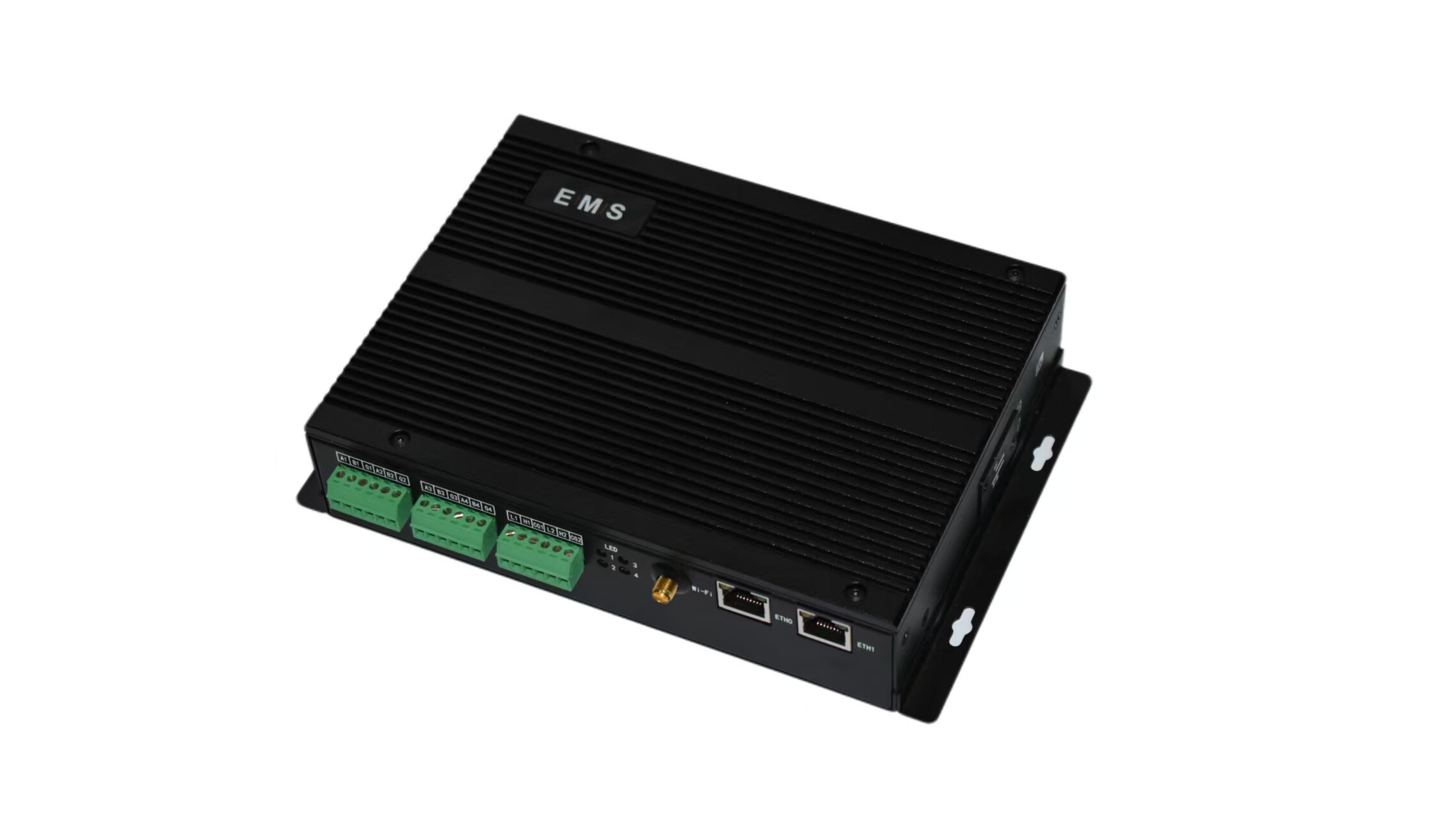
- Communication and integration readiness with BMS, vehicle controllers, or energy management systems through LAN, CAN, or RS485.
When these criteria are reviewed together, the industrial battery pack vs lead-acid comparison becomes a strategic sourcing question rather than a basic component comparison.
Industrial battery pack vs lead-acid: which technical differences affect field performance?
Lead-acid batteries remain familiar in many industrial settings because they have been used for decades and can be sourced in standardized formats. However, familiarity does not always equal suitability. In high-cycle, high-demand applications, a modern Industrial Battery Pack typically offers higher usable energy, deeper discharge capability, stronger voltage consistency, and more advanced battery management. These differences matter when equipment must run across long work shifts or support grid-side storage events.
A core technical distinction is chemistry and system architecture. Many industrial lithium systems for new energy use LFP-based cell technology because it supports long cycle life, strong thermal stability, and predictable performance across a broad operating window. By contrast, lead-acid systems are often more sensitive to repeated deep discharge, prolonged partial state of charge, and charging inefficiencies, especially in demanding duty cycles.
Another key difference is usable operating range. In procurement reviews, teams often focus on nominal capacity, but usable capacity is more important. If one battery can safely operate across a recommended SOC range of 5%–100% and another requires more conservative use to preserve life, the practical energy available per cycle is different. That directly changes runtime planning, backup duration, and charging frequency.
Thermal control also shapes field reliability. In outdoor sites or enclosed equipment compartments, temperatures may move from below freezing to above 40℃ within the same project region. A liquid-cooled system can manage heat more evenly, while a passive or less controlled system may experience faster performance drift, shortened lifespan, or more frequent derating during heavy operation.
Side-by-side comparison for business evaluation
The table below summarizes the practical differences procurement and business evaluation teams usually review when comparing an Industrial Battery Pack with lead-acid in new energy and off-road machinery applications.
The comparison shows why technical architecture matters as much as chemistry. Buyers evaluating uptime, service planning, and integration cost usually find that modern industrial battery systems align better with data-driven asset management than legacy lead-acid solutions.
Where lead-acid may still be considered
Lead-acid may still be suitable for low-cycle applications, backup systems with infrequent discharge, or projects where the operating profile is simple and replacement intervals are already accepted. But once the application involves frequent cycling, weight sensitivity, thermal exposure, or uptime-critical equipment, the gap usually becomes more visible within the first 12–24 months of use.
Which solution fits off-road machinery and high-capacity energy storage better?
Off-road machinery and high-capacity energy storage are not generic battery applications. They involve vibration, dust, outdoor exposure, long duty hours, variable charging opportunities, and in many cases strict uptime expectations. That is why buyers should assess a battery not only by chemistry but also by enclosure protection, cooling method, communication interfaces, and pack-level safety response.
For example, a high-capacity storage platform such as 215kWh reflects what many industrial buyers now expect from an advanced energy storage solution. Its configuration includes LFP-280 material, 215kWh nominal capacity, 768V nominal voltage, a 627.2V–817.6V operating voltage range, passive balancing BMS, and liquid cooling. These are not cosmetic details; they directly influence integration planning, thermal stability, and charging behavior in demanding field conditions.
Protection and environmental adaptability are equally important. An IP55 enclosure rating, operating temperature range of -25℃ to 60℃, humidity tolerance up to 95%RH without condensation, and operating altitude up to 2000m provide a useful benchmark for buyers comparing industrial systems against conventional lead-acid arrangements that may require more environmental compromise or supporting infrastructure.
From a business perspective, when a system also provides communication options such as LAN, CAN, and RS485, evaluation teams can better plan integration with machine controllers, EMS platforms, and remote monitoring workflows. This reduces engineering ambiguity during the 2–6 week interface confirmation stage that often delays real deployment.
Application matching by use case
The table below helps buyers align battery type with actual use conditions instead of making decisions based only on purchase price or legacy preference.
For projects with demanding uptime and system integration requirements, industrial lithium-based packs generally fit better. For simple, low-frequency, budget-driven applications, lead-acid may still be reviewed, but only after the full operating profile is confirmed.
Technical details buyers should not overlook
- A standard charge rate of 0.5C affects charger sizing, turnaround planning, and peak power management.
- Noise below 80dB at 1m can matter in semi-enclosed industrial sites and equipment zones.
- A fire fighting system that combines internal detection, cluster-level extinguishing, optional aerosol support, and water fire suppression can strengthen project risk control.
- Pack size of 1400mm × 1300mm × 2100mm and weight around 3T influence transport, installation access, and foundation assessment.
These details often surface late in procurement reviews, yet they should be checked in the first technical round to avoid redesign, shipping delays, or site incompatibility.
How should procurement teams compare lifecycle cost, risk, and replacement planning?
The cost debate around industrial battery pack vs lead-acid is often oversimplified. A lower initial purchase price can be attractive when budgets are tight, but industrial buyers should compare cost across at least 4 dimensions: usable energy, maintenance burden, replacement frequency, and operational disruption. If one option requires earlier replacement or more frequent service intervention, the financial difference can widen significantly after the first 18–36 months.
Cycle life is one of the most useful indicators in this analysis. A storage system with cell cycle life of at least 6000 cycles at 25℃, DOD95%, and EOL80% offers a very different planning horizon from a solution that degrades faster under heavy cycling. For applications with one cycle per day, 6000 cycles may support many years of structured operation, depending on actual duty profile, thermal environment, and maintenance practice.
Replacement planning also affects commercial risk. If a fleet or storage site depends on synchronized battery performance, uneven aging between units may complicate asset scheduling. Procurement managers should therefore assess not only nominal life but also monitoring visibility, pack consistency, and service support responsiveness over quarterly and annual review cycles.
For business evaluation teams, the better question is not “Which battery is cheaper?” but “Which battery delivers lower operational cost per usable cycle while meeting safety, delivery, and integration requirements?” That framing is more aligned with modern energy projects and board-level investment review.
A practical 5-point procurement checklist
- Confirm the real duty cycle: daily runtime, charging windows, peak current, and expected annual cycles.
- Check usable SOC strategy: whether the supplier defines a practical operating range such as 5%–100% or requires hidden limitations.
- Review environmental fit: temperature band, protection level, humidity limit, and altitude suitability.
- Verify communication and control: BMS logic, balancing method, and interface compatibility with LAN, CAN, or RS485.
- Ask for delivery and implementation detail: quotation scope, lead time, commissioning support, and after-sales response process.
This checklist helps procurement teams compare offers on a like-for-like basis instead of accepting incomplete quotations that hide downstream engineering and service cost.
Common commercial mistakes in battery sourcing
One common mistake is comparing batteries only by nominal kWh. Another is assuming all lithium systems are equivalent. In reality, pack architecture, cooling, BMS, fire response, and communication options can create major differences in deployment complexity and risk. A third mistake is failing to define acceptance criteria before purchase, such as operating temperature range, charge rate, interface list, and installation constraints.
A structured sourcing process usually includes 3 stages: technical requirement confirmation, commercial comparison, and implementation review. This approach is especially valuable when the project involves off-road machinery electrification or smart grid storage where field conditions are less forgiving than in standard indoor backup applications.
What standards, implementation factors, and supplier capabilities should buyers review?
In industrial and new energy procurement, the battery itself is only part of the decision. Buyers should also review whether the supplier can support requirement clarification, system matching, production coordination, and post-delivery communication. This becomes more important when projects involve multiple stakeholders such as engineering teams, purchasers, integrators, and end users across a 6–12 week procurement cycle.
Standards and compliance discussions should remain practical and project-specific. Depending on region and application, buyers may review electrical safety, transportation, system integration, fire protection strategy, ingress protection, and communication compatibility. It is good practice to ask suppliers to explain which specifications are standard, which are optional, and which depend on project customization.
Implementation planning should cover transport dimensions, site access, cooling requirements, communication mapping, and acceptance procedures. For example, when a battery enclosure weighs around 3T, logistics and installation conditions cannot be left to the final week before delivery. Early confirmation reduces risk of crane rescheduling, site mismatch, or delayed commissioning.
This is where a vertically integrated supplier can bring practical value. EN New Power Technology (Shandong) Co., Ltd. combines R&D, manufacturing, and sales capabilities across the value chain. For buyers, that can mean more efficient technical clarification, better alignment between quotation and actual production, and clearer communication when discussing customization, delivery windows, or solution adjustments.
Questions to ask before issuing a purchase order
- What operating voltage range is required by the equipment or storage architecture, and does the battery match it without extra redesign?
- Is the cooling method appropriate for ambient temperatures from -25℃ to 60℃ or for the actual local operating range?
- What fire protection approach is integrated, and what site-level safety responsibilities remain with the project owner?
- How long is the typical engineering confirmation cycle, and what documentation is needed for interface validation?
These questions help convert a battery quotation into a deployment-ready procurement decision. They are also useful for internal approval teams that need clear technical and commercial justification.
FAQ for procurement and business evaluation teams
Below are common questions buyers ask when comparing industrial battery pack vs lead-acid for new energy projects.
How do I know if lead-acid is still acceptable for my project?
Start with the use profile. If the application is low-frequency backup with limited discharge events per month and modest runtime expectations, lead-acid may still be reviewed. If the system will cycle daily, operate outdoors, or support uptime-critical equipment, an Industrial Battery Pack is usually the more suitable option because of deeper usable energy, stronger monitoring, and better lifecycle planning.
What should I compare first: price, cycle life, or safety?
Compare all 3, but in order. First confirm technical fit, including voltage, temperature, enclosure, and communication. Second compare safety architecture and operational controls. Third compare lifecycle cost, including replacement and service burden. A low initial price is not helpful if the battery fails to meet environmental or integration requirements during the first project stage.
How long does battery selection usually take in a B2B project?
For standard requirements, technical confirmation may take 1–2 weeks. For customized off-road machinery or smart grid storage projects, the review can extend to 3–6 weeks depending on interface complexity, safety review, and internal approval steps. Early definition of capacity, voltage, communication, and site conditions can shorten the cycle.
Can one platform support different capacity needs?
In many industrial programs, yes. Buyers often review product families rather than a single fixed configuration. For example, capacity options may cover 100kWh, 200kWh, 215kWh, 233kWh, 261kWh, 372kWh, and 418kWh, allowing closer matching to project scale, runtime target, and installation constraints. This reduces both under-sizing and unnecessary overspending.
Why choose us when evaluating industrial battery pack solutions?
For procurement personnel and business evaluation teams, the ideal supplier is not simply one that offers a battery. It is one that can help clarify requirements, reduce integration risk, and support realistic delivery planning. EN New Power Technology (Shandong) Co., Ltd. focuses on new energy power systems for off-road machinery and smart grid energy storage, supported by integrated R&D, manufacturing, and sales capabilities.
That integrated model is valuable when your project needs more than a catalog item. It supports faster communication on parameters such as nominal voltage, cooling method, communication protocol, protection level, and fire response architecture. It also helps commercial teams align technical discussion with quotation scope, lead-time review, and implementation expectations in a more controlled way.
If you are comparing Industrial Battery Pack and lead-acid options for off-road machinery or high-capacity energy storage, a focused consultation can help shorten evaluation time and avoid mismatched sourcing. Buyers can discuss parameter confirmation, product selection, delivery cycle expectations, customization boundaries, certification-related questions, sample support possibilities, and quotation details before moving into final approval.
If your team is reviewing system capacity, voltage range, environmental conditions, or replacement planning, you can also ask for a solution comparison based on your actual duty cycle. This is often the fastest way to determine whether a standard platform or a tailored configuration is the better commercial path for your project.
What you can consult with us about
- Capacity and voltage confirmation for off-road machinery or energy storage integration.
- Selection advice between lead-acid replacement and industrial lithium battery upgrade paths.
- Delivery planning, site installation conditions, and logistics constraints for large battery systems.
- Customization discussion for communication interfaces, cooling structure, or project-specific operating requirements.
- Quotation communication and technical review for solutions including 215kWh high-capacity configurations.
A well-prepared sourcing decision starts with clear technical data and realistic commercial alignment. If your project requires a battery solution that balances uptime, safety, lifecycle cost, and system integration, now is the right time to move from broad comparison to requirement-based evaluation.