
Document No. 1490: "Four-Pronged Approach" – Power Transmission and Distribution Pricing Reform Sends Clear Signals: Is a New Growth Frontier Emerging for the Energy Storage Industry?
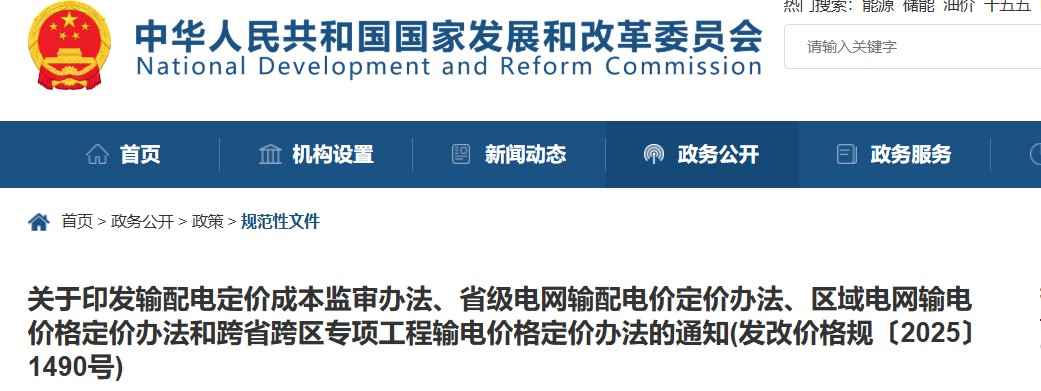
On November 27, the National Development and Reform Commission issued the "Notice on the Cost Supervision and Audit Measures for Transmission and Distribution Pricing, the Pricing Measures for Transmission and Distribution Prices of Provincial Power Grids, the Pricing Measures for Transmission Prices of Regional Power Grids, and the Pricing Measures for Transmission Prices of Cross-Provincial and Cross-Regional Special Projects," establishing a comprehensive regulatory framework for transmission and distribution pricing across China. This initiative centers on the power sector reform principle of "regulating the middle while liberalizing both ends," aiming to standardize the determination of transmission and distribution prices and strengthen cost supervision and auditing mechanisms for provincial power grids, regional power grids, and cross-provincial and cross-regional special transmission projects.
Interpretation of Core Highlights
Unified Supervision and Classified Pricing
All four measures are grounded in cost supervision and auditing, establishing clear definitions of the components of transmission and distribution pricing costs, methodologies for cost determination, and the scope of expenditures excluded from recoverable costs. These provisions strengthen cost discipline for power grid enterprises. For inter-provincial and inter-regional transmission projects, the "operating period method" is applied to determine volumetric electricity prices. Regional and provincial power grids adopt a pricing model based on "permitted costs plus reasonable returns," implementing a two-part tariff structure that combines capacity-based charges with energy-based charges.
Promotion of optimal power resource allocation
In the pricing framework for inter-provincial and inter-regional projects, it is explicitly stipulated that 30% of additional revenue generated from actual utilization hours exceeding the benchmark level shall accrue to power grid enterprises, while 70% must be allocated specifically to support the inter-regional transmission of new energy. This reflects a policy orientation favoring clean energy delivery. Furthermore, the document indicates that future pricing mechanisms—such as two-part tariffs and single-capacity tariffs—may be explored to align with the evolving needs of a new power system centered on renewable energy sources.
Enhancement of efficiency incentives for power grid enterprises
By strictly setting internal rates of return on capital investment (e.g., no more than 5% for inter-provincial and inter-regional projects), constraining operation and maintenance expense ratios, and standardizing pricing practices for related-party transactions, the regulatory framework ensures fair returns for power grid enterprises while incentivizing improvements in operational efficiency and cost control. All measures incorporate periodic verification and adjustment mechanisms to ensure price adaptability in response to changes in investment levels and electricity demand.
Clarification of cost allocation mechanisms
Capacity electricity fees of regional power grids are allocated to provincial power grids, which then pass on the relevant costs to end-users through transmission and distribution prices, forming a cost-sharing chain of "who benefits, who bears". The line loss gains and losses of inter-provincial and cross-regional projects are borne or shared by power purchasers, further reflecting the principle of equality between rights and responsibilities.

Impacts on Industries and Enterprises
For Power Grid Enterprises
Cost management will become more refined, with higher requirements for asset and business accounting. At the same time, enterprises will be incentivized to obtain reasonable returns through improving operational efficiency and optimizing investments.
For Power Generation Enterprises (Especially New Energy Enterprises)
The optimization of the inter-provincial and cross-regional power transmission pricing mechanism and the profit-sharing mechanism will help promote the absorption of new energy on a larger scale and improve the economy of outward transmission.
For Power Users
Pricing transparency will be enhanced, and cost sharing will be more reasonable. In the long run, it will help form price signals reflecting real supply and demand as well as costs.
For Market-oriented Transactions
The clarification of transmission prices for regional and provincial power grids provides a more stable price basis for inter-provincial and cross-regional power transactions and the operation of spot markets.
The issuance of these four measures is another important initiative to deepen China's power system reform. It not only improves the transmission and distribution pricing system but also provides a solid institutional guarantee for building a unified national power market system and promoting the green and low-carbon transformation of energy. In the future, with the advancement of the construction of a new power system, the power transmission pricing mechanism will continue to evolve, and innovative models such as capacity pricing and transmission right transactions are expected to be gradually implemented.
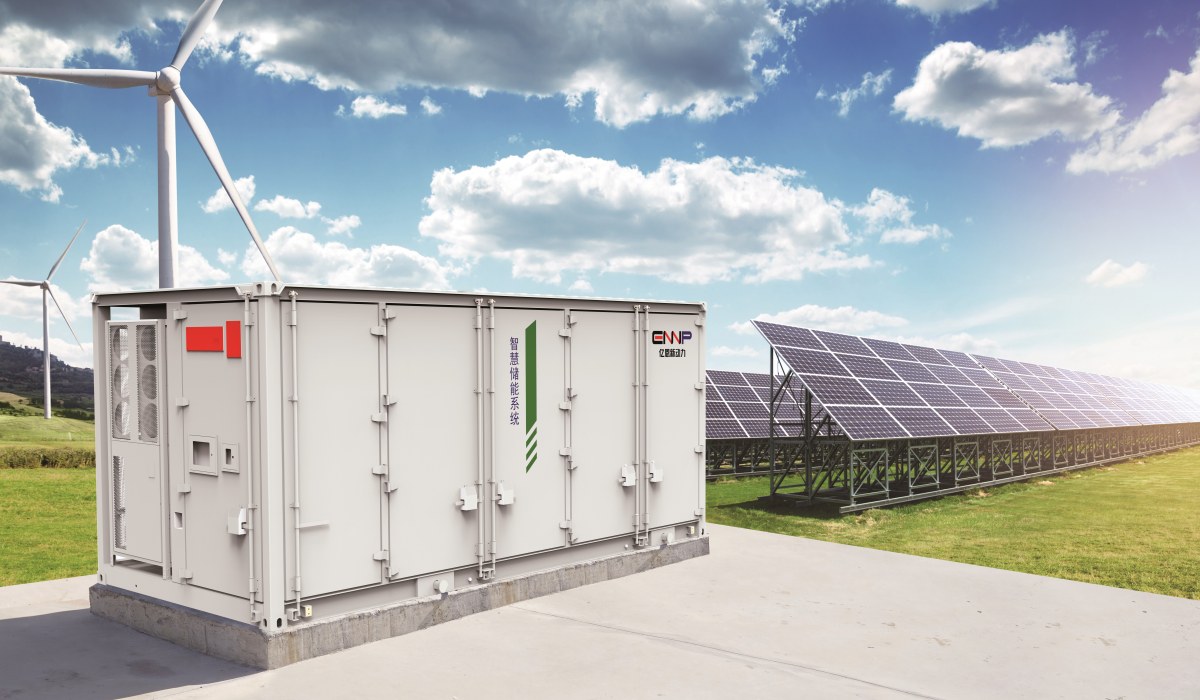
EN New Power will continue to track the dynamics of policy implementation. Relying on our professional accumulation in the energy storage field, we will provide partners with policy interpretation, market analysis, and strategic consulting services, jointly seize new opportunities in the energy transition, and assist the high-quality development of the industry.